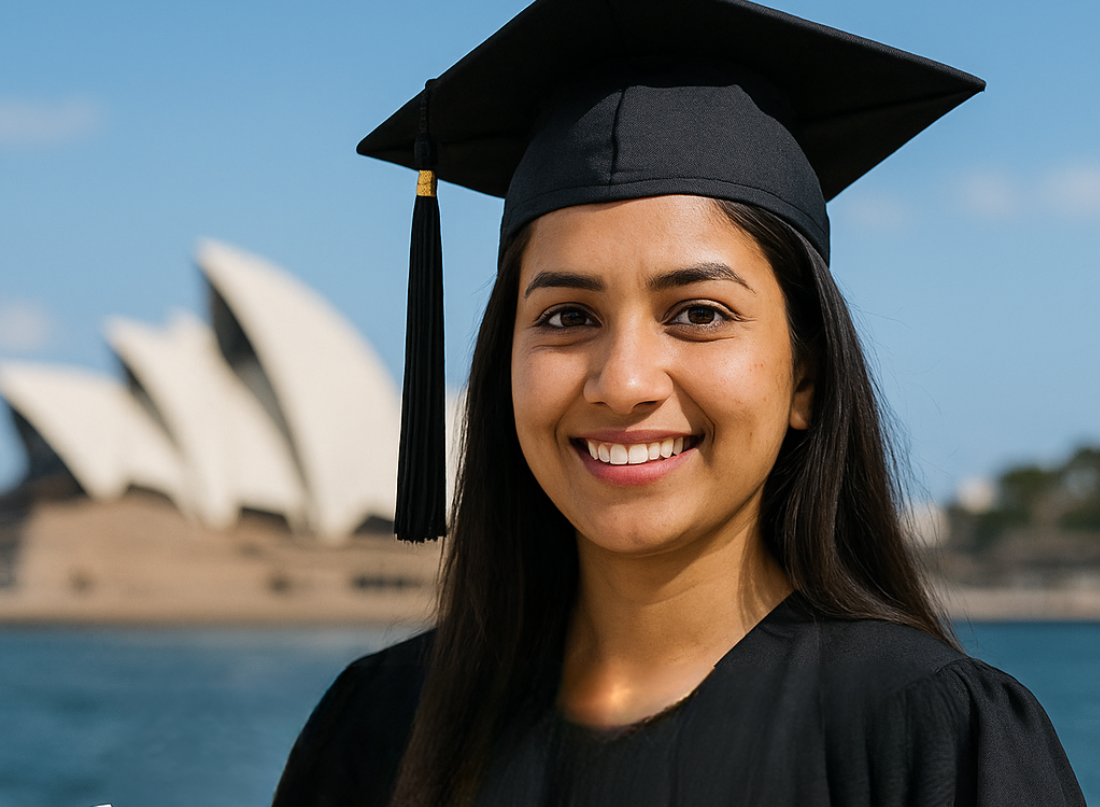
The subclass 500 student visa is the pathway for international students to study at registered Australian educational institutions. Each year, thousands of students come to Australia on this visa to pursue degrees, vocational qualifications and other study programs.
Getting the application right matters more than it used to. Since 2024 the Department of Home Affairs has replaced the old Genuine Temporary Entrant test, raised financial thresholds, increased application charges and tightened the rules around changing courses. Understanding these requirements — and the conditions that attach to the visa once granted — is essential to a smooth application and a compliant stay.
What is the subclass 500 student visa?
The subclass 500 is a temporary visa that permits international students to study full-time in a course registered on CRICOS. It is generally granted for the length of your course plus a short additional period, usually up to five years.
Unlike work or skilled migration visas, the student visa exists for the purpose of study. It does carry work rights, but those rights are limited and conditional — they are a feature of the visa, not its purpose.
Eligibility requirements
The criteria below are assessed together, not in isolation. A weakness in one area is often what causes a case officer to look harder at the others.
Genuine Student (GS) requirement
The Genuine Student requirement is the cornerstone of the assessment. It applies to all applications lodged on or after 23 March 2024, replacing the former Genuine Temporary Entrant (GTE) requirement. Applications lodged before that date are still assessed under the old GTE framework.
The change is not cosmetic, and it is where most outdated advice goes wrong. Under GS, the Department must be satisfied that your primary reason for applying is to obtain a quality education, and that your chosen course makes sense given your background, circumstances and career goals. Critically, the GS requirement recognises that genuine students may develop skills Australia needs and may later choose to apply for permanent residence. Future intentions of that kind do not count against you.
The assessment is built into the online application form rather than made through a separate statement. You answer a set of targeted questions, with a limit of 150 words per response, covering matters such as your circumstances in your home country, why you have chosen this course and provider, and how the course relates to your future. Home Affairs prefers responses given in the form itself rather than as an attached statement.
Two things strengthen a GS response: specificity, and documents that corroborate what you have written. Case officers give more weight to claims supported by evidence — employment references with verifiable contact details, academic transcripts, evidence of family and financial ties, and a course selection that follows logically from what you have studied or done before.
Enrolment at a CRICOS-registered provider
You must hold a valid Confirmation of Enrolment (CoE) from a provider registered on the Commonwealth Register of Institutions and Courses for Overseas Students. CRICOS-registered providers include universities, vocational education providers, schools, English language colleges and other approved providers.
The CoE is issued through PRISMS once you accept your offer and pay any required deposit. Check that the name on your CoE matches your passport exactly — even minor discrepancies cause delays. An offer letter is not normally a substitute for a CoE.
If your application covers a package of courses, gaps between courses must generally be less than two calendar months. A longer gap of three to four months is accepted where the first course finishes at the end of the Australian academic year in November and the next begins in February.
English language proficiency
You must demonstrate English proficiency appropriate to your level of study, unless an exemption applies.
For tests taken on or after 7 August 2025, the Department accepts results from IELTS Academic, IELTS General Training, PTE Academic, TOEFL iBT, OET, Cambridge C1 Advanced, CELPIP General, LANGUAGECERT Academic and the Michigan English Test.
The test must be sat at a secure test centre. At-home and online formats — including the Duolingo English Test, IELTS Online, IELTS Indicator, TOEFL iBT Home Edition and OET@Home — are not accepted for visa purposes, even where your university accepts them for admission. This catches out a significant number of students each year, who arrive at the visa stage with a score their institution was happy with and the Department will not consider.
Test results generally need to be recent at the time of lodgement — typically within two years, with a longer window for some of the newer tests. Confirm the validity period for the specific test you sit.
Indicative benchmarks for direct entry to degree study sit around IELTS 6.0 overall, with lower scores accepted where you package an ELICOS course beforehand (broadly, 5.5 with around 10 weeks of ELICOS, or 5.0 with around 20 weeks). Your provider sets the requirement for your course, and some fields — nursing, teaching and allied health in particular — require higher individual band scores.
Exemptions may apply if you hold a passport from the United Kingdom, United States, Canada, New Zealand or Ireland (British National (Overseas) passports are excluded), if you have completed qualifying study in English, or if you are enrolled in certain course types such as school studies, postgraduate research or standalone ELICOS.
Financial capacity
You must show genuine access to funds covering 12 months of course fees, 12 months of living costs, return travel, and school costs for any school-aged dependants.
The current living cost figures are:
Applicant Amount (12 months)
Primary applicant AUD $29,710
Spouse or de facto partner AUD $10,394
Each dependent child AUD $4,449
These amounts are reviewed periodically. Confirm the current figures before lodging.
The operative word is genuine. Funds must be genuinely available to you and properly sourced. A single large deposit appearing shortly before lodgement, with no explanation of where it came from, invites scrutiny rather than satisfying the criterion. Evidence commonly includes bank statements over a period of months, approved education loans, sponsorship letters supported by the sponsor’s own financial records, scholarship or government funding letters, and evidence of ongoing income.
Overseas Student Health Cover
You must obtain and maintain Overseas Student Health Cover (OSHC) from an approved provider for the entire period of your visa. OSHC covers basic medical expenses, hospital costs and prescription medications, and must be current from the date you first arrive in Australia.
Note that OSHC is specific — Overseas Visitor Health Cover is not a substitute. Your education provider may arrange cover on your behalf, or you can arrange it independently.
The application process
1. Obtain a Confirmation of Enrolment. Apply to your chosen provider, accept the offer and pay any deposit to have your CoE issued.
2. Gather supporting documentation. Typically: a valid passport; your CoE; English test results or evidence of an exemption; financial evidence; identity documents; and evidence supporting your GS responses. Health examinations are required for most applicants, and biometrics for some nationalities. Penal clearance certificates are not a routine requirement for the subclass 500, but the Department may request them depending on your circumstances and travel history.
What you must attach depends on your evidence level. Under the Simplified Student Visa Framework, the documentation required at lodgement is set by a combination of your passport country and your education provider, not by one or the other alone. A higher evidence level means financial and English evidence must be attached upfront rather than provided only if requested.
These ratings change, sometimes out of cycle. On 8 January 2026 the Department moved India, Nepal, Bangladesh and Bhutan to Evidence Level 3, the highest documentation category, with more rigorous verification of financial and academic documents and correspondingly longer processing. A higher evidence level does not mean refusal — it means the application must be more thoroughly documented from the outset.
Always check your own combination using the Department’s Document Checklist Tool immediately before lodging, rather than relying on what applied to someone else or to an earlier intake.
3. Prepare and lodge the application. Apply online through ImmiAccount. Answer the GS questions carefully and attach the evidence that supports them. Be accurate and complete; inconsistencies between your form, your documents and your CoE are a common cause of delay and refusal.
Note that onshore lodgement is restricted. Holders of certain temporary visas — including Visitor (subclass 600) and Temporary Graduate (subclass 485) visas — cannot apply for a student visa while in Australia and must apply offshore. If you are already in Australia on another visa, confirm your position before making plans that assume an onshore application.
4. Pay the visa application charge. From 1 July 2026 the charge for a primary applicant is AUD $2,500, up from AUD $2,000. Concessional arrangements continue to apply to primary applicants holding passports from ASEAN member countries, to Pacific Island and Timor-Leste applicants, and to students applying for independent ELICOS and non-award courses. Additional applicants pay separate charges. Use the Department’s Visa Pricing Estimator for an exact figure. The charge is not refunded if your application is refused.
5. Await processing. Since 14 November 2025, offshore student visa applications have been prioritised under Ministerial Direction 115, which allocates processing priority according to how each education provider is tracking against its allocated share of the national planning level (set at 295,000 international student commencements for 2026). Providers well within their allocation receive faster processing than those at or over it.
The practical consequence is that your choice of provider now affects your processing time as much as your own circumstances do. Beyond that, times vary by education sector, passport country, evidence level and the completeness of your application — from a few weeks for well-documented applications to several months. Lodge as early as you can once your CoE and documents are ready. You can generally enter Australia up to 90 days before your course starts.
Visa conditions and obligations
Your grant notice lists the conditions that apply to you. The following are the ones that most often cause problems.
Condition 8202 — enrolment, attendance and progress
Condition 8202 has three limbs operating at once:
1. You must remain enrolled in a registered course.
2. That course must be at the same AQF level as, or higher than, the course for which your visa was granted.
3. You must maintain satisfactory attendance and academic progress, monitored and reported by your provider under the ESOS Act.
The AQF-level limb is the one most students miss. Moving to a lower AQF level course — or to a non-AQF award course — breaches condition 8202, and you must apply for and be granted a new student visa before commencing the lower-level course. This applies even if the change is with your existing provider. The single exception is a change from a doctoral degree (AQF 10) to a Masters (AQF 9).
A new CoE does not automatically fix a change in AQF level. If your provider reports you for non-compliance, the Department may cancel your visa under section 116 of the Migration Act 1958, and a cancellation can affect your ability to be granted further temporary visas.
If you are struggling, speak to your provider about an approved reduced study load or formal leave of absence. Simply not attending is treated as a breach.
Condition 8105 — work limitations
1. While your course is in session: a maximum of 48 hours per fortnight.
2. During scheduled course breaks: unrestricted hours.
3. Before your course commences: you cannot work at all.
The fortnightly limit is firm. Exceeding it breaches your visa conditions and can lead to cancellation. Note that the limit is tied to your course being in session, not to the calendar — a break your employer treats as quiet season is not a scheduled course break.
One exception applies: students undertaking a Masters by Research or a doctoral degree are not subject to the fortnightly cap once their course has commenced.
Condition 8501 — health insurance
You must hold OSHC for the duration of your stay. Allowing cover to lapse, including during a course break or while a new visa is being processed, breaches your conditions.
Condition 8533 — notifying your address
You must tell your provider your residential address within seven days of arriving in Australia, and notify any change of address within seven days. You should also keep the Department informed of significant changes in your circumstances, including changes to your course or family composition.
Character
Criminal conduct can result in visa cancellation and creates lasting difficulties for future visa applications.
Changing courses or providers
You can change course or provider, but the rules are stricter than most students expect and the change is a compliance decision as much as an academic one.
Within the first six months of your principal course, Standard 7 of the National Code restricts transfers between registered providers. Your existing provider must release you, unless a limited exception applies — for example, where the provider has had a sanction imposed that prevents you continuing, or where a government sponsor supports the change in writing. A new provider must not knowingly enrol you during this period.
After six months of your principal course, you can generally transfer without a release letter. Your principal course is the main or highest-level course on your visa, which in a packaged arrangement is usually the final one.
In every case, check the AQF level of the new course against condition 8202 before you accept an offer or withdraw from your current enrolment, and update your CoE. A poorly planned change can also weaken your position in any future application — including a subclass 485 — by making your study history look incoherent.
After completing study: the 485 pathway
On completing an eligible qualification, you may be able to apply for a subclass 485 Temporary Graduate visa, which allows you to remain in Australia and work for a period after graduation. It remains a popular step for graduates seeking Australian work experience or a pathway toward skilled migration.
Eligibility settings for the 485 — including age limits, stream duration, English requirements and application timeframes — have changed several times in recent years, and the application charge has risen significantly. Check the current requirements well before you finish your course rather than after; some of the criteria are assessed by reference to dates that have already passed by the time you graduate.
Common questions
Can I work on the student visa?
Yes — up to 48 hours per fortnight while your course is in session, and unrestricted hours during scheduled course breaks. You cannot work before your course begins. Masters by Research and doctoral students are not subject to the fortnightly cap once their course has started.
Can I apply for a student visa while I am already in Australia?
It depends on your current visa. Visitor visa holders and Temporary Graduate (485) visa holders cannot apply onshore and must lodge from outside Australia. Get advice on your specific visa before you make arrangements.
What if I need to change courses?
You can, but check three things first: whether the new course is at the same or a higher AQF level, whether you are within the first six months of your principal course, and whether you need a new visa rather than just a new CoE. Get advice before you act, not after.
How recent does my English test need to be?
Your result generally needs to be within two years at the time you lodge, with a longer window for some newly approved tests. Once your visa is granted, a test expiring during your stay is not an issue.
Is the Duolingo English Test accepted?
Not for the visa. Many universities accept it for admission, but the Department only accepts tests sat at a secure test centre.
What if I cannot pay the full course fees upfront?
Many providers offer payment plans and accept a partial upfront payment. Note this is separate from the financial capacity requirement — you still need to demonstrate access to funds covering 12 months of fees and living costs at the time you apply.
What happens if my visa is refused?
The application charge is not refunded. Depending on where you applied and the reason for refusal, you may have review rights at the Administrative Review Tribunal, subject to strict time limits. Seek advice immediately — the deadlines are short and cannot be extended.
Getting professional support
A student visa application is straightforward when your circumstances are straightforward. Where it becomes complex is in the assessment of the Genuine Student criterion, the sourcing and presentation of financial evidence, a study history that has changed direction, or a previous visa refusal.
Many students benefit from engaging a MARA-registered migration agent to assess their position before lodgement and to present their circumstances accurately and favourably.
For guidance on student visa applications, eligibility assessment or any questions about studying in Australia, contact Migration Guru Pty Ltd. Our MARA-registered team has extensive experience assisting international students through the visa application process.
Contact Us:
Phone: +61 7 3036 3800
Email: info@migrationguru.com.au
Website: migrationguru.com.au